Wright Balance® Certification Level 1
Copyright, Wright Balance® 2026
Southwest Florida PGA Section, 16 Continuing Education Units
May 20, 2026
Contact: David F. Wright, Ph.D., PGA dvdwright99@ Gmail or
Heather Angel, PGA, [email protected]
"The man who asks a question is a fool for a minute; the man who does not asks is a fool for life." Confucius circa 575 BC
• 8:00 A M - 8:30 AM
Arrival & Registration Coffee / Tea
This certification is 90% hands-on and 100% focused on validated results. Every principle you learn is anchored in measurable biomechanical changes. You won't just study the theory. you and your students will experience an immediate Proof of Concept through real-time balance experience.
Wright Balance is an evolving disruptive technology driven by continuous global research. Please ensure you are signed up for our monthly updates to receive the latest insights and content.
Teaching aids provided: Harvey Penick Grip Trainer; Bar & Bungee for hip line balance measurement and Vinyl Strip with Balance Measurements by Core. Grip Trainer Clip for indicating changes in clubface with changes in balance.
• 8:30 AM
Introduction
Your Student’s History, Goals and Physical Status and Lesson 1 Reference
https://instructions.wrightbalance.com/wright-balance-lesson-february-2025/
Testing The 3 Core Zones of Wright Balance®
NOTE: Core Zone Testing is a measure of the individual's strength. Strength is present only in one of the three Core Zone
Observations of Strength Measurements worldwide
MEN
60 Percent Upper;
30 Percent Middle:
10 Percent Lower (N of 250)
WOMEN
25 Percent Upper
50 Percent Middle
25 Percent Lower (N of 125)
• 9:00 AM
Attaching the Bar & Bungee
By securing the Bar & Bungee 2-3 inches below the belt buckle, we isolate the lower pelvis. This allows the student and you to see hip rotation in various stance widths and the predictability of hip squareness.

The Wright Balance® Power Tests Determine Strength and Dominant Core Zone
1. Testing Power Without A Club in Each 8-Inch Stance Range (PSR)
Each Core Zone has an 8-inch Stance Range where the player's hips are square.


The following video is a demonstration of the test of power without a club at 13, 18 and 26 inches.
The Power Test is Done as Follows:
Note: The Power Test is done within the 8-Inch Performance Stance Range for each Core Zone. The corresponding "color" stance width on the vinyl strip is of no consequence here.
Upper Core = Test at 12 or 13 Inches
Middle Core = Test at 18 inches
Lower Core = Test at 26 inches
Where your player shows the most power when tested is their Dominant Core Zone. The confirmation of this test is in the following 8- inch range.
2. Testing The Full 8-inch Range using the Wright Balance Vinyl Strip
(Hips will be square ONLY in the "tested" Stance Range where Power was demonstrated)
Upper Core Performance Stance Range (PSR) = 8 to 16 inches (plus or minus 1 inch)
Balance will be on Balls of Feet as shown here

Middle Core Performance Stance Range (PSR) = 16 to 24 inches (plus or minus 1 inch)
Balance will be BEHIND the balls of feet and FORWARD of Center of Arches

Lower Core (BLUE) Center of Arches
Lower Core Performance Stance Range (PSR) = 20 to 28 inches (plus or minus 1 inch)
Balance will be over the Center of the Arches

Note: Step Narrower and Wider than your WB 8-INCH Performance Stance Range (PSR), add knee flex and note hip rotation.
The following video was shot at San Antonio Country Club with one of the teach professionals during training. This video is an illustration of determining the WB 8 inch Performance Stance Width Range (PSR). As you will see in this video, Nick is a Middle Core player and his PSR is 16 to 24 inches.
3. How to use the alignment stick to test Heel to Toe Balance
Upper Core (RED) = Balance on Balls of Feet inside 8 to 16 inches plus or minus 1 inch
Middle Core (BLACK) Balance just BEHIND the balls of feet and FORWARD of Center of Arches inside 16 to 24 inches plus or minus 1 inch
Lower Core (BLUE) Balance over the Center of Arches inside 20 to 28 inches
Note: when Heel to Toe Balance on the alignment stick does not match the Dominant Core Zone, your hips rotate open or closed.
Note: The following 18 second video shows the second "Plane" of balance based upon Heel to Toe movement through the core. Note that the heel to toe balance changes by Core Zone consistent with these vertical illustrations.
https://www.youtube.com/watch?v=cL_9Y3cDdmU
Visualizing the Vertical Balance Line
The artist’s rendering below approximates the vertical balance profiles you will experience on the alignment stick within your 8-inch PSR:
-
RED (Upper Core): Forward balance position.
-
BLACK (Middle Core): Centered balance position.
-
BLUE (Lower Core): Back (Posterior) balance position.
Note: These images are conceptual approximations to assist with your visual understanding and are not exact biomechanical blueprints.

4. Testing POWER SPOTS
NOTE: The 8-INCH Performance Stance Range (PSR) and Power Spots will always Match
UPPER CORE
- First Pad of Middle Finger of Lead and Trail Hands= POWER (Mark with Red Sharpie)
PSR = 8 to 16 inches (plus or minus 1 inch)

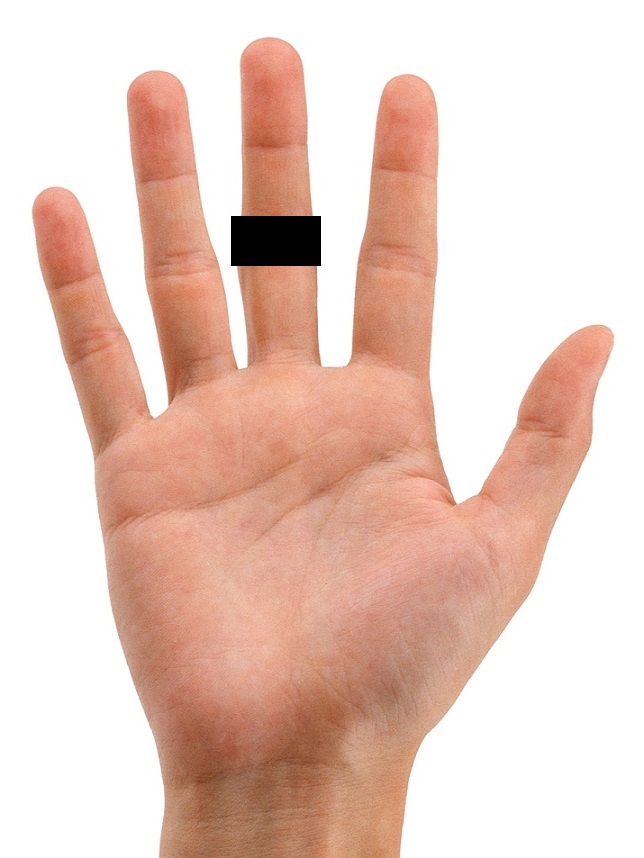
MIDDLE CORE
- First Knuckle Crease of Middle Finger of Lead and Trail Hands = POWER (Mark with Black Sharpie)
PSR = 16 to 24 inches (plus or minus 1 inch)
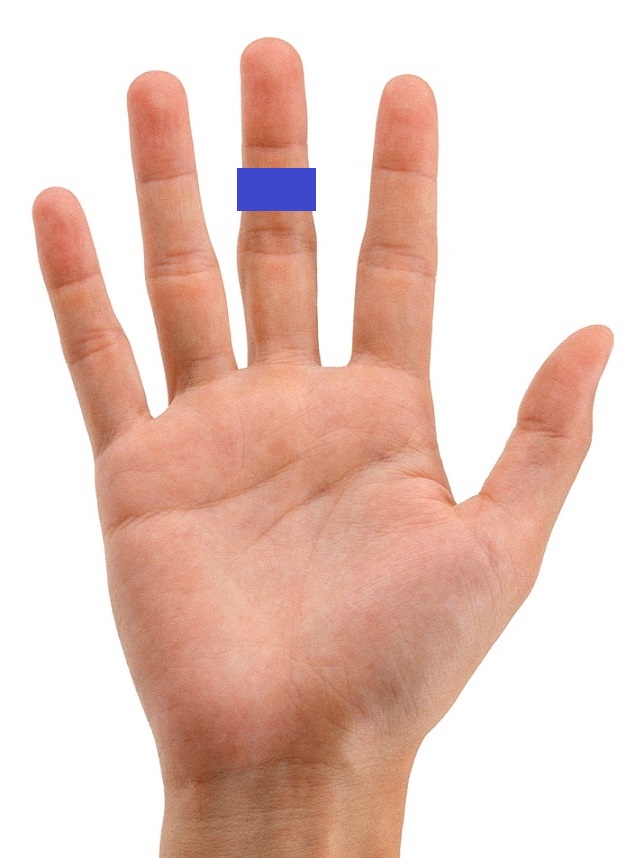
LOWER CORE
- Second Pad of Middle Finger of Lead and Trail Hands= POWER (Mark with Blue Sharpie)
PSR = 20 to 28 inches (plus or minus 1 inch)
POWER SPOT SUMMARY


The Physical Test of Power Spots

Reference
Giving a First Lesson: Finding the Dominant Core Zone via Power, PSR & Power Spots
https://instructions.wrightbalance.com/giving-a-first-lesson/
Research Study 2025
Puchinsky, G., Wright, D, & Vomer, R.
Testing Balance on the Transverse Plane with Changes in Finger Pressure
Supported by The Mayo Clinic & Pending Peer Review for Publication
• 9:45 AM
The Wright Balance® Downswing Club Path Test (DPT)
The Origin of The Wright Balance® Downswing Club Path Test (DPT)
Research in Dr. Frank Jobe's biomechanics lab at Centinela Hospital in the early 2000s shed a precise light on the balance position at ground level and path with the putter. The following images were shot during the putting segment in the Biomechanics Lab. Each player had 40 light sensors on their body, 1000 force sensors in their shoes and light sensors on the putter and irons.


When the putter path was observed as square to the line, the following balance image of the force / pressure sensors was present 100 percent of the time from address through the stroke to finish.

When the putter path was outside-in, this was a predictable observation at ground level before and after the stroke. Note the position of heel to toe balance as shown by the force / pressure sensors.

When the putter path was inside - out, this was a predictable observation of the force / pressure sensors at ground level. Note the position of heel to toe balance. Note the center of force / pressure forward in the left foot and back in the right foot.

These same observations were made in the full swing phase of this research.

The Wright Balance® Downswing Club Path Test (DPT) provides immediate feedback on the path the club will track through impact, putter through driver. You are able to "test" by the hip line and immediately correct any phase of setup from grip to posture to sequence of motion.
Putting & The Wright Balance® Downswing Club Path Test
- Place Bar & Bungee on Lower Pelvis
- Mark Dominant Core Power Spot on middle finger of each hand with matching “COLOR” of Core Zone (RED= UPPER: BLACK= MIDDLE & BLUE = LOWER)
- Stand in your 8-inch Stance Range
- Grip Putter with YOUR Power Spot on Underside of Putter Grip with your lead hand
- Bring Putter up with shaft parallel to the ground so you can see face angle
The following photos are of Colin Montgomerie in the Wright Balance® Biomechanics Studio in Southern California in 2020. Colin is an Upper Core Player. He is in his Performance Stance Range (8 to 16 inches). Note in the following photo Colin is standing at 16 inches and his putter face is square.

When he stepped Wider than his Performance Stance Range (17 inches) his putter face closes

Putting Stroke
- Hip Rotation = Putter Face Roll and Path at Impact
- Step outside 8 inch range and make a stroke
- Change to incorrect Power Spot on the underside of putter
10:15 AM
BREAK
10:30 AM
Resume Certification
Grip Size
Set Power Spots in 8 inch Performance Stance Width Range (PSR) Swing to top and apply force on downswing path

If grip does not fit, you will easily move the player off balance

If the grip fits, you won't be able to move them off balance

Imbalances in the Community

Add Wright Balance® Bands to Wrist / Ankles and Test Putting Stroke On vs Off
Reference
**Application of Pressure and the Propagation of Force: An Overview **
https://instructions.wrightbalance.com/how-power-spots-create-propagation-of-force/
2026 Masters Screen Shots
Cameron Young

Hidecki Matsuyama

Shane Lowry

2026 Masters

Rory 2025

NBA 80s

Rick Berry

Wrist vs Ankles
- Hip rotation standing and with knee flex
- Level of hips and shoulders pre / post Wright Balance® bands on wrist and ankles
- Trail hip at address pre and post Wright Balance® wrist / ankle bands without a club (Why no club? just for illustration...because open hip line = high trail hip at address)
- Ability to squat
- Step forward & Back
- Carrying Angle
- Knee pronation / supination
Result of Wright Balance® Wrist vs Ankle Bands on Kinetic Chain
 e
e
Before & After

Repeat Grip Size with Wrist / Ankle Bands
Set Power Spots in 8 inch Performance Stance Width Range (PSR) Swing to top and apply force on downswing path
Grip Size
Set Power Spots in 8 inch Performance Stance Width Range (PSR) Swing to top and apply force on downswing path
If grip does not fit, you will easily move the player off balance
If the grip fits, you won't be able to move them off balance
Putter Path, Stance Width, Grip Size, Power Spots & the DPT
- Test Grip Size with & without wrist / ankle bands
- Testing Putter Path with wrist vs ankle bands
- Stand tall after each stroke and notice that Putter face roll angle is perpendicular to your hip line regardless what putter is used
11:30 AM
The Harvey Penick Grip Trainer
The Harvey Penick Grip Trainer using the Downswing Club Path Test (DPT) in the 8-inch Performance Stance Range
Testing the lead hand & Hip Line
Adding & Testing the Trail Hand & Hip Line
Testing Grip With "Arms Drop" & shaft parallel to ground
References
Grip: The Genius of Harvey Penick
https://instructions.wrightbalance.com/grip-the-genius-of-harvey-penick/
Harvey Penick Grip & Wrist Cock Parts 1-3
https://instructions.wrightbalance.com/october-13-zoom-session/
12:30 PM
LUNCH BREAK
1:15 PM
Resume Certification: Summary of AM & Questions
Resetting the Kinetic Chain With Extension of the Wright Balance® Bands
Briefly stretch band on wrist or ankle to reset disrupted Core
Carrying Angle
Wright Balance® Wrist vs Ankle Bands & Carrying Angle
It would take another day plus testing on your own to begin to understand the impact of the carrying angle on Posture, Grip, Power and repetition of the Carrying Angle through the swing. Understanding the Carrying Angle is of utmost importance in testing grip, setting posture and secondary tilt at address. These Four eBooks will get you up to speed on the carrying angle
- The Power of Wright Balance® Angles --The Carrying Angle
https://instructions.wrightbalance.com/ghost/#/editor/5e9a4a7e037bea000195d5a9
2. The Lower Core Player: Carrying Angle Part 1
https://instructions.wrightbalance.com/carrying-angle-introduction/
3.The Upper Core Player: Carrying Angle Part 2
https://instructions.wrightbalance.com/carrying-angle-the-upper-core-player/
4.The Middle Core Player & Tiger's Unwitting Advantage: Carrying Angle Part 3
https://instructions.wrightbalance.com/carrying-angle-part-3-the-middle-core-player
Testing Grip Size with and without the Wright Balance® Bands
If the Wright Balance® Bands are worn on each wrist or each ankle, Grip Size is no longer an issue. Repeat Grip Size test with and without the Wright Balance® Bands.
If grip does not fit, you will easily move the player off balance
If the grip fits, they will be able to hold their posture with demonstrated stength and you won't be able to move them off balance.
Posture of each Core Zone
The following illustration is from 2012 where I am using the weight with Sandra Palmer, LPGA Hall of Fame. When a weight is held mid chest, it will naturally set the posture of any Core Zone when posture sequence is correct. The bar shown in this image provides feedback on shoulder rotation. Sandra is a Lower Core Player. Note The level plane of her shoulders, a characteristic of the Lower Core Player.

Introduction of Finger Sleeves
Does the same Power exist in all 3 Core Zones or ONLY the Dominant Core Zone?
- **Move Sleeve to Upper Core Power Spot (one finger of each hand):Test again at 12 - 13 inches
- Move Sleeve to Middle Core Power Spot (one finger of each hand): Test again at 18 inches
- Move Sleeve to Lower Core Power Spot (one finger of each hand): Test again at 26 inches**
Power is the same w
Upper Core
Bar on hips
Finger Sleeve:: Place on first pad on 1 finger of each hand
Stance: 8 to 16 inches
Alignment Stick: You will find your balance over or just forward of the balls of the feet until hips square
Posture: No knee flex; Bend from hips & set spine angle; Add knee flex after spine angle is set.
Wright Balance® Downswing Club Path Test (DPT): Stand tall, return facing target line looking straight ahead and add knee flex. If hips are square, your Posture was perfect. If hips are open or closed, repeat Posture Set until the Wright Balance Downswing Club Path Test (DPT) results in a square hip line.
Middle Core
Bar on hips
Finger Sleeve:: Place on first knuckle up from the palm on 1 finger of each hand
Stance: 16 to 24 inches
Alignment Stick: Just behind the balls of the feet and forward of center of Arches until hips square
Posture: Set "everything together" in a simultaneous set of Upper and Lower Core
Wright Balance® Downswing Club Path Test (DPT): Stand tall, return facing target line looking straight ahead and add knee flex. If hips are square, your Posture was perfect. If hips are open or closed, repeat Posture Set until the Wright Balance Downswing Club Path Test (DPT) results in a square hip line.
Lower Core
Bar on hips
Finger Sleeve:: Place on second pad up from the palm on 1 finger of each hand
Stance: 20 to 28 inches Wide
Alignment Stick: Balance is over the center of the Arches until hips square
Posture: Stand Tall; Keep spine straight & "sit down"; add spine angle after sitting down (Spine angle and thigh angle will be identical)
Wright Balance® Downswing Club Path Test (DPT): Stand tall, return facing target line looking straight ahead and add knee flex. If hips are square, your Posture was perfect. If hips are open or closed, repeat Posture Set until the Wright Balance Downswing Club Path Test (DPT) results in a square hip line.
1:30 PM
Angles of Power by Core Zone (eBooks: The Carrying Angle by Core Zone)
•
Recognizing Sequence of Motion (kinematic sequence) in your student by Center of Mass & Lead Knee at the top of the swing (eBook)
2:00 PM
Sequence of Motion by Core Zone & and the Wright Balance® Downswing Club Path Test (DPT)
"Prescribing" Sequence of Motion for your Student by Core Zone and Testing Using the Wright Balance® Downswing Club Path Test (DPT)
**NOTE: Test each Core Zone by placing 1 Finger Sleeve on the Core Zone Power Spot of each hand **
Upper Core
Bar on hips
Finger Sleeve:: Place on first pad on 1 finger of each hand
Stance: 8 to 16 inches
Posture: No knee flex; Bend from hips & set spine angle; Add knee flex after spine angle is set
Start Motion with lead knee or trail hip
Pivot: Center of Mass is over Target Side
Lead Knee: Points behind the ball at top of swing
Wright Balance® Downswing Club Path Test (DPT): Stand tall, return facing target line looking straight ahead and add knee flex. If hips are square, your process was perfect. If hips are open or closed, repeat each phase of process Until DPT results in a square hip line.
Middle Core
Bar on hips
Finger Sleeve:: Place on first knuckle up from the palm on 1 finger of each hand
Stance: 16 to 24 inches
Posture: Set "everything together" in a simultaneous set of Upper and Lower Core
Start Motion with Simultaneous movement of Upper & Lower Body (Everything together)
Pivot: Center of Mass is over Pelvis
Lead Knee: Points at ball at top of swing
Wright Balance® Downswing Club Path Test (DPT): Stand tall, return facing target line looking straight ahead and add knee flex. If hips are square, your process was perfect. If hips are open or closed, repeat each phase of process Until DPT results in a square hip line.
Lower Core
Bar on hips
Finger Sleeve:: Place on second pad up from the palm on 1 finger of each hand
Stance: 20 to 28 inches Wide
Alignment Stick: Balance is over the center of the Arches until hips square
Posture: Stand Tall; Keep spine straight & "sit down"; Add spine angle after sitting down (Spine angle and thigh angle will be identical
Start Motion with Upper Body (shoulders only) and allow the Lower Body to release naturally after shoulders start the swing.
Pivot: Center of Mass is over Trail Side
Lead Knee: Points at ball at top of swing
Wright Balance® Downswing Club Path Test (DPT): Stand tall, return facing target line looking straight ahead and add knee flex. If hips are square, your process was perfect. If hips are open or closed, repeat each phase of process Until DPT results in a square hip line.
The Lead Knee, Center of Mass by Core Zone Sequencing Reference:
Matching Characteristics of Center of Mass, Hip Turn and Lead Knee at the Top of the Swing by Core Zone
https://instructions.wrightbalance.com/stance-width-ranges-by-core-region/
Shoulder Rotation Impact


The 3 Swing Models of Wright Balance®
Reference
The Three Swings of Wright Balance®
https://instructions.wrightbalance.com/the-three-swings-of-wright-balance/
2:30 PM
The appearance of your students Kinetic Chain upon arrival (eBook images)
Aligning your student’s kinetic chain for optimum performance and maximum Ground Reaction Force :
The Wright Balance® Bands level the hips and shoulders and eliminate a high trail hip at address. The Wright Balance® Bands align the Kinetic Chain for improved body alignment, balance and injury prevention while minimizing soft tissue pain and maximizing ground reaction force
• 3:15 PM Shoulder Rotation and distance relationship (eBook, calculated by our resident Biophysicist, James M Smith, Ph.D)
•
• Arms position on the chest wall by Core Zone for Maximum Shoulder Rotation using the DPT Test Grip Sizing and Heel to Toe Balance using the DPT and alignment stick.
•
• How to eliminate the Grip Size Variable and the importance of Player Lesson Diaries (eBook & Diaries Provided)
References
Wright Balance® LESSON 1 (5.0)
https://instructions.wrightbalance.com/wright-balance-lesson-february-2025/
Clubface Must Look Open to be Square
Set and Release of the Club by Core Zone
Test with club, Finger Sleeves and in each Performance Stance Range.
Plane of shoulders by Core Zone
Bar on hips; No club; Test with Finger Sleeves in each Core Zone Performance Stance Range (PSR); Set Posture & Sequence of Motion; hold at top of swing and note plane of shoulders; return to address and test Downswing Club Path (DPT)
- Upper Core = Vertical Shoulder Plane
- Lower Core = Flat / Level Shoulder Plane
- Middle Core = Diagonal Shoulder Plane (between Upper & Lower Core)
Back Pain, Soreness & Stiffness Management
The Wright Balance® Express
The Wright Balance® Express is a result of 25 years of research on exercises that impact the core. The following video is the most recent version of the Wright Balance® Exercise that squares the Core in all planes of motion creating the same Carrying Angle on both the left and right side.
Routine & Alignment
The following eBook is a detailed overview of how to determine which hand to hold the club in behind the ball; a routine for how to walk into the ball and get set; and how to use your eyes to align to your target. If your alignment is not set precisely, your body lines will likely cross in front or behind and you have set up to miss the shot.
I advise my students to test their alignment three (3) times each time before they begin their range practice.
https://instructions.wrightbalance.com/alignment-2/
Mental Balance
&
Physical Balance
Q & A
5:30